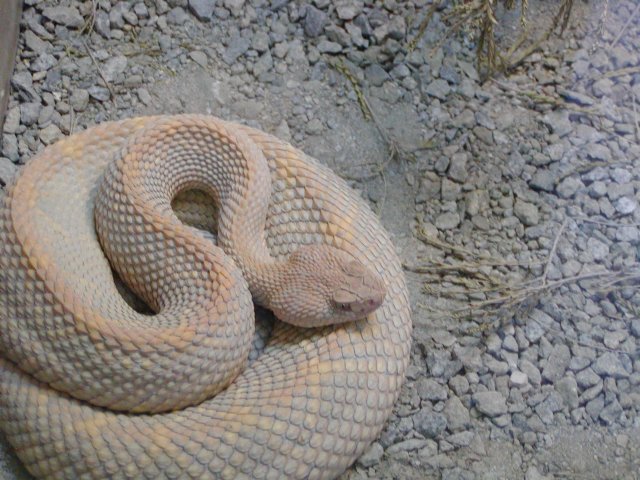
To create a realistic animation the most important part is accurate movement and tweens. The modeling can be fairly simple with a well done animation as the story is told by the activities the characters do, not the quality of the rendering. With this in mind I have been looking into walk cycles and motions which the human body use for certain activities. I have been using a mirror alot too for my modeling to get an accurate idea of motion in the limbs. I am trying to gather some clips of snakes and birds movements, to study and learn about their form in motion.
Saturday, 20 February 2010
Thursday, 11 February 2010
Leanring how to animate emotions
Thursday, 4 February 2010
Learning about cameras

In our second lecture we looked into animating cameras. How to create paths for cameras and other objects to follow in animation. From the modifier panel to the right there is a Object Shapes section which has the tool lines in it. Click and drag or click and move the tool around your environment to create a path on the X/Y plane, then right click to finish the path. This then can be linked to an object or camera by a Path constraint under the Animation drop down bar. The path acts like a time-line and you can add or take away frames to make the time an object travels on the path faster or slower. Here is a picture of my cityscape with a path linked to the target on my target camera.
Wednesday, 3 February 2010
The Serpent and the Eagle
Tuesday, 2 February 2010
Understanding Literature for children
Literature for children is aimed at 12 years and younger, it is made up of many different types including picture books, board books, fiction, non fiction, poetry and more.
In the education of children's literature there is many different approaches and styles including: (1) unknown authorship, (2) conventional introductions and conclusions, (3) vague settings, (4) stereotyped characters, (5) anthropomorphism, (6) cause and effect, (7) happy ending for the hero, (8) magic accepted as normal, (9) brief stories with simple and direct plots, and (10) repetition of action and verbal patterns.
Children's literature is often heavily illustrated, this often includes key points in the story which help the reader to comprehend the story. It also sets the scene and helps stimulate the imagination. This is great for an effective animation to bring a story into colour and life.
In the education of children's literature there is many different approaches and styles including: (1) unknown authorship, (2) conventional introductions and conclusions, (3) vague settings, (4) stereotyped characters, (5) anthropomorphism, (6) cause and effect, (7) happy ending for the hero, (8) magic accepted as normal, (9) brief stories with simple and direct plots, and (10) repetition of action and verbal patterns.
Children's literature is often heavily illustrated, this often includes key points in the story which help the reader to comprehend the story. It also sets the scene and helps stimulate the imagination. This is great for an effective animation to bring a story into colour and life.
Monday, 1 February 2010
Choosing suitable fables
There are many interesting Fables which I have read from the list that I would like to animate, but what makes an interesting story doesn't always make for effective animating. So I am am taking a decision based on my own skill on which Fables I could animate and produce in a clear effective way. Here is an example of one which could be animated.
The Eagle and the Arrow
An Eagle was soaring through the air when suddenly it heard
the whizz of an Arrow, and felt itself wounded to death. Slowly
it fluttered down to the earth, with its life-blood pouring out of
it. Looking down upon the Arrow with which it had been pierced,
it found that the shaft of the Arrow had been feathered with one
of its own plumes. "Alas!" it cried, as it died,
Moral: "We often give our enemies the means for our own destruction."
Yet this being simple and short that may be why I wouldn't choose this one, as I would prefer to animate something a little more complex. At the same time, its message may be less than understandable to children.
The following fable has a more understandable meaning and its moral is more suitable to be educated to children. This is my favorite so far, but I want to be right in my decision as there is a lot of modeling to do!
The Serpent and the Eagle
An Eagle swooped down upon a Serpent and seized it in his talons
with the intention of carrying it off and devouring it. But the
Serpent was too quick for him and had its coils round him in a moment;
and then there ensued a life-and-death struggle between the two. A
countryman, who was a witness of the encounter, came to the assistance
of the eagle, and succeeded in freeing him from the Serpent and
enabling him to escape. In revenge, the Serpent spat some of his
poison into the man's drinking-horn. Heated with his exertions, the
man was about to slake his thirst with a draught from the horn, when
the Eagle knocked it out of his hand, and spilled its contents upon
the ground.
"One good turn deserves another."
The Eagle and the Arrow
An Eagle was soaring through the air when suddenly it heard
the whizz of an Arrow, and felt itself wounded to death. Slowly
it fluttered down to the earth, with its life-blood pouring out of
it. Looking down upon the Arrow with which it had been pierced,
it found that the shaft of the Arrow had been feathered with one
of its own plumes. "Alas!" it cried, as it died,
Moral: "We often give our enemies the means for our own destruction."
Yet this being simple and short that may be why I wouldn't choose this one, as I would prefer to animate something a little more complex. At the same time, its message may be less than understandable to children.
The following fable has a more understandable meaning and its moral is more suitable to be educated to children. This is my favorite so far, but I want to be right in my decision as there is a lot of modeling to do!
The Serpent and the Eagle
An Eagle swooped down upon a Serpent and seized it in his talons
with the intention of carrying it off and devouring it. But the
Serpent was too quick for him and had its coils round him in a moment;
and then there ensued a life-and-death struggle between the two. A
countryman, who was a witness of the encounter, came to the assistance
of the eagle, and succeeded in freeing him from the Serpent and
enabling him to escape. In revenge, the Serpent spat some of his
poison into the man's drinking-horn. Heated with his exertions, the
man was about to slake his thirst with a draught from the horn, when
the Eagle knocked it out of his hand, and spilled its contents upon
the ground.
"One good turn deserves another."
Subscribe to:
Posts (Atom)